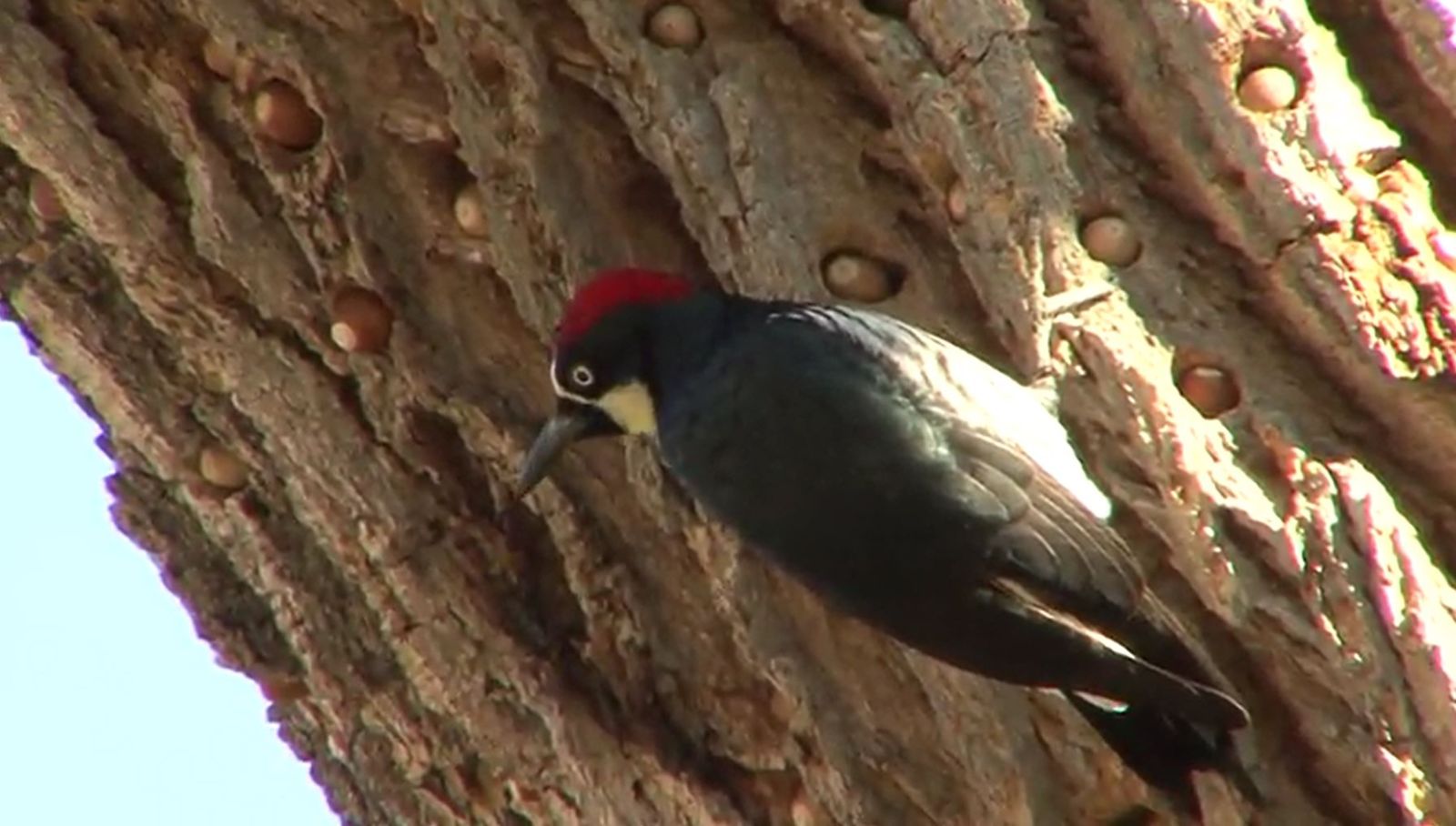
On Saturday, February 14, Jeff Martin,Conservancy member, wildlife educator, naturalist, videographer, and woodpecker enthusiast, leda group of birders and bird enthusiasts on the "Woodpecker Trail", beginning at the Stonewall entrance of Claremont Canyon Regional Preserve to the top of Panoramic Way—a route through the territories of six regularly occurring woodpecker species. Attendees saw and heard around 21 bird species, including a Nuttall’s Woodpecker, an Acorn Woodpecker, a Northern (“Red-shafted”) Flicker, and a Red-breasted Sapsucker. Thank you to everyone who joined this fun walk! If you were unable to attend the walk, visit Jeff's self-guided Woodpecker Trail on our website, where you can learn more about the woodpeckers residing in the area, and see more photos and videos by Jeff himself.
Woodpecker Walk Sunday, March 15 Time: 8am-12pm (meet at 7:45am)
We will be hosting another Woodpecker Walk this month. Please RSVP as we have limited spots.The woodpecker walk, round trip, up and down the hill is approximately 2.5 miles, but we will take breaks along the way as we look for woodpeckers. Moderate to heavy rain cancels. Light, occasional rain we meet as scheduled.
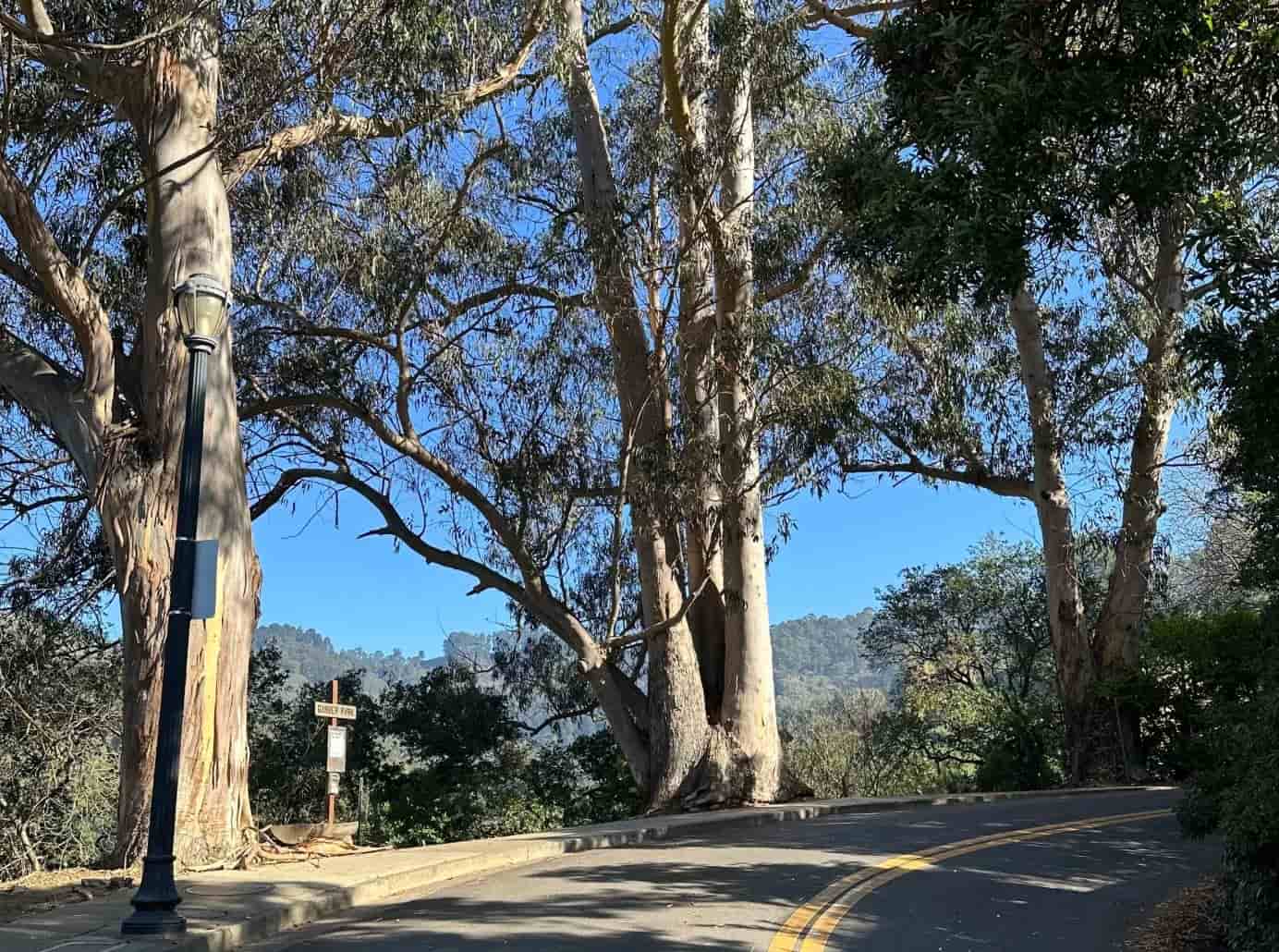
Larger eucalyptus trees on Alvarado Road with a ridge line of eucalyptus on East Bay Municipal Utility District (EBMUD) land in the background | Photo by Marilyn Goldhaber.
Working with Oakland on the Safer Canyon Initiative
On January 27, Board Members, Elizabeth Stage and Greg Call, met with Oakland city officials to discuss the approval process for the removal of eucalyptus trees and other work in Garber Park. The city officials expressed their excitement for the project.
Based on our conversation, the Claremont Canyon Conservancy is moving forward with the Safer Canyon Initiative. We are seeking approval from Oakland to carry out the recommendations outlined in the their Vegetation Management Plan (VMP) for Garber Park (other than the work they recommended adjacent to Claremont Avenue). Oakland has identified the work along Claremont Avenue as a top priority for their use of Measure MM funds.
In 2026, the Conservancy intends to put to work the generous $100,000 in "safer canyon" donations raised from our members last year to remove eucalyptus trees from the Alvarado entrance and the eucalyptus cluster near the fireplace in Garber Park. The removal of these eucalyptus trees was called for in the VMP and set out as the purple shaded area in this Garber Park map (see page 132).
Other work the Conservancy intends to raise funds to undertake as set forth in the VMP includes:
Maintaining trail networks for access and vegetation breaks, clearing downed wood and debris from gullies, and removing dead limbs.
Managing vegetation within 30 feet of trailheads. to minimize ignition potential. We intend to focus on the trailheads at Alvarado Road, Rispin Drive and Evergreen Lane.
Managing vegetation within 10 feet of the south and east boundaries.
Thank you for your support and together we look forward to making Claremont Canyon a Safer Canyon!
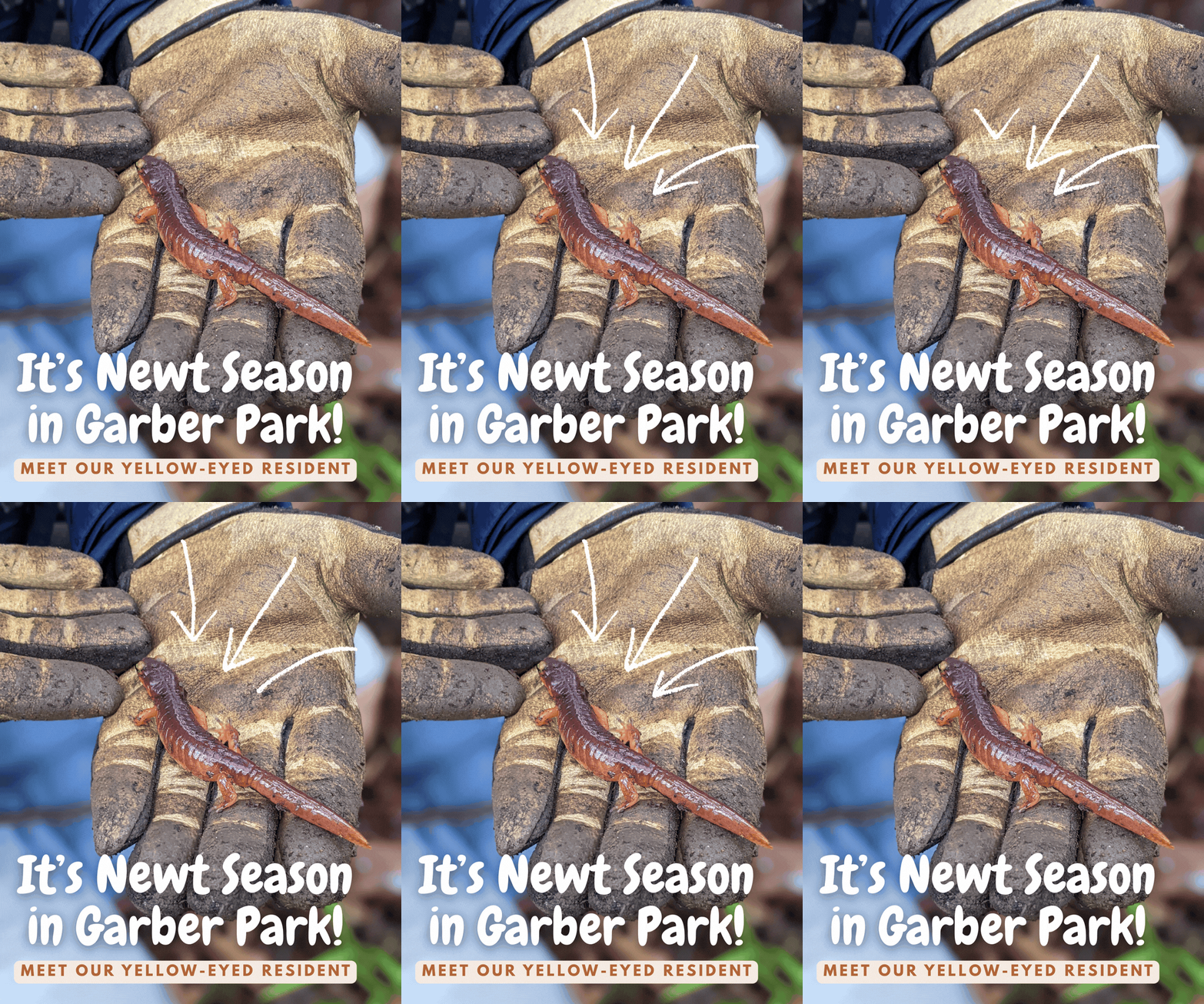
While removing non-native and invasive English ivy to uncover native ferns, a local steward Rich Robinson came across this curious salamander as it tried to climb on him. After being carefully placed back in its habitat, the restoration efforts continued | Photo by Ruby J. Soto Cardona.
Our local salamander
The photo above is believed to be of ayellow-eyed ensatina (Ensatina eschscholtzii xanthoptica), characterized by the bright yellow patch on the eyes. These salamanders are commonly found throughout the Bay Area, including in Garber Park's oak woodlands. These ensantinas tend to stay underground during the hot season, but our recent rainy weather, ideal habitat conditions for our amphibian friends have allowed them to come out to the surface. Fun facts: yellow-eyed ensantinashave a life span of up to 15 years and they breathe through their skin and tissues lining their mouth!
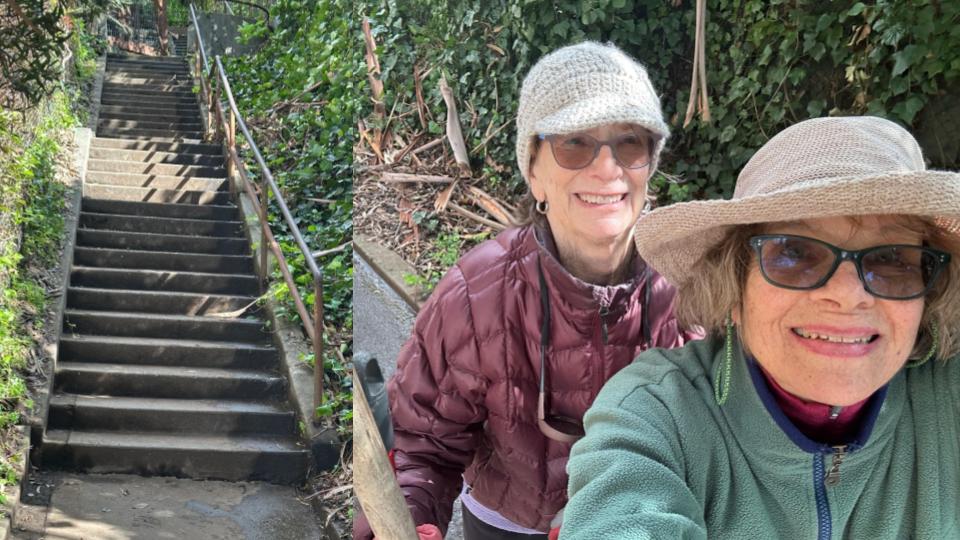
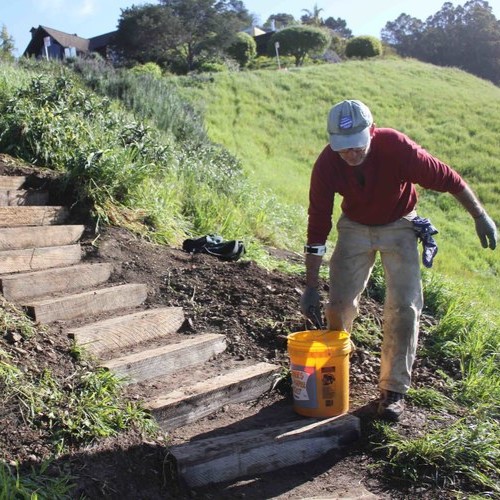
(Left) Shelagh Brodersen and (right) Nancy Mueller rejoicing after a morning of clearing up the steps on the Evergreen Path | Photo by Nancy Mueller.
A successful morning!
The heavy rains surprised us on our volunteer days in February, but that didn't stop our Conservancy board member Nancy Mueller and Garber Park Stewards' founder Shelagh Brodersen from clearing the Evergreen steps from eucalyptus debris, which included slippery leaves, fallen bark, and pods. Thanks to their great work, the path is now more accessible and enjoyable for our community. Thanks to the Claremont Resort & Club for hosting previous volunteer workdays. We look forward to more volunteer events this year and to collaborating with the Garber Park Stewards.
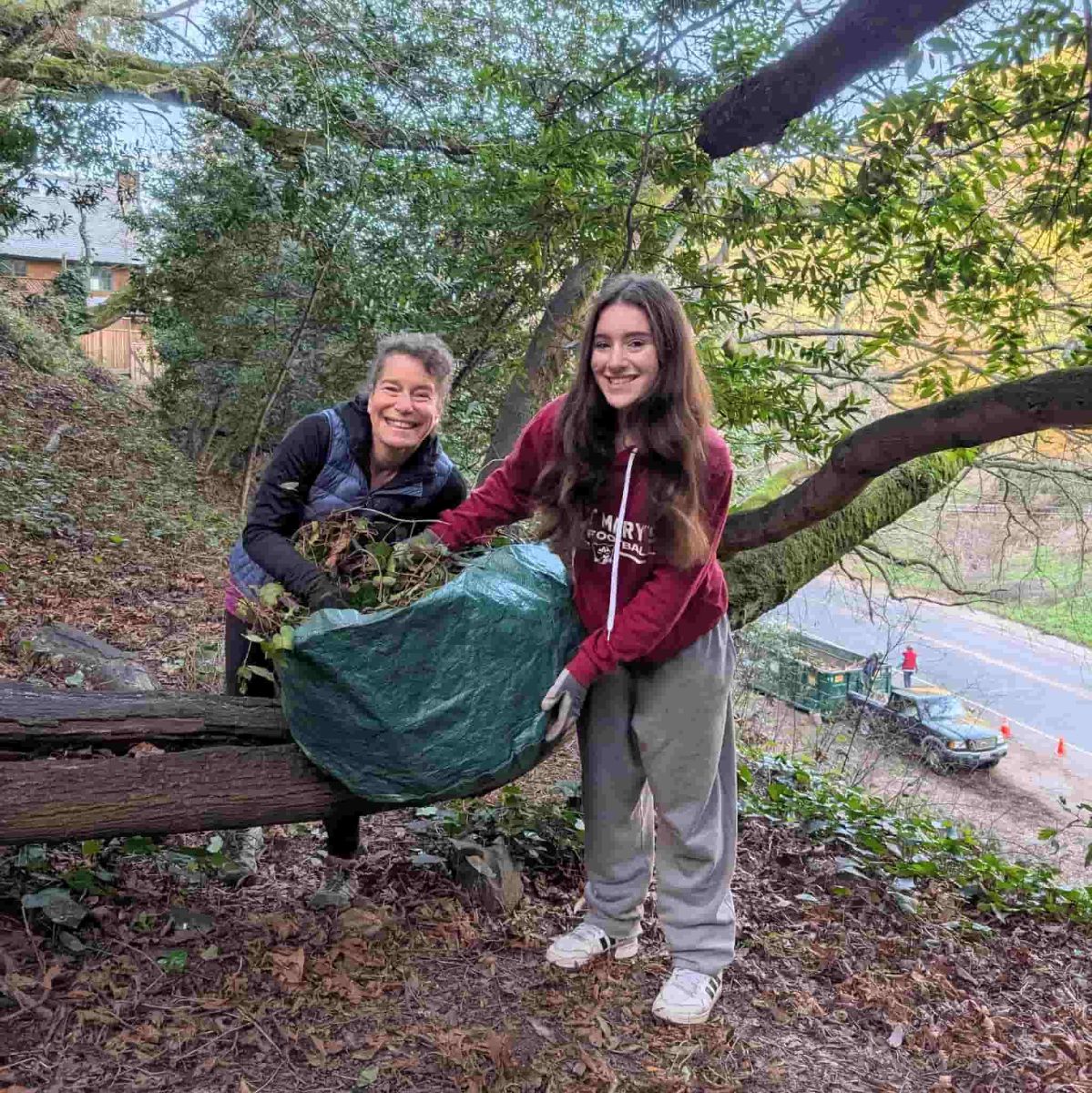
If you would like to volunteer with us,send us an email at info@claremontcanyon.orgor fill out the form below. We provide tools and gloves just wear sturdy shoes you don't mind getting dirty, long sleeves and pants, and bring a water bottle.
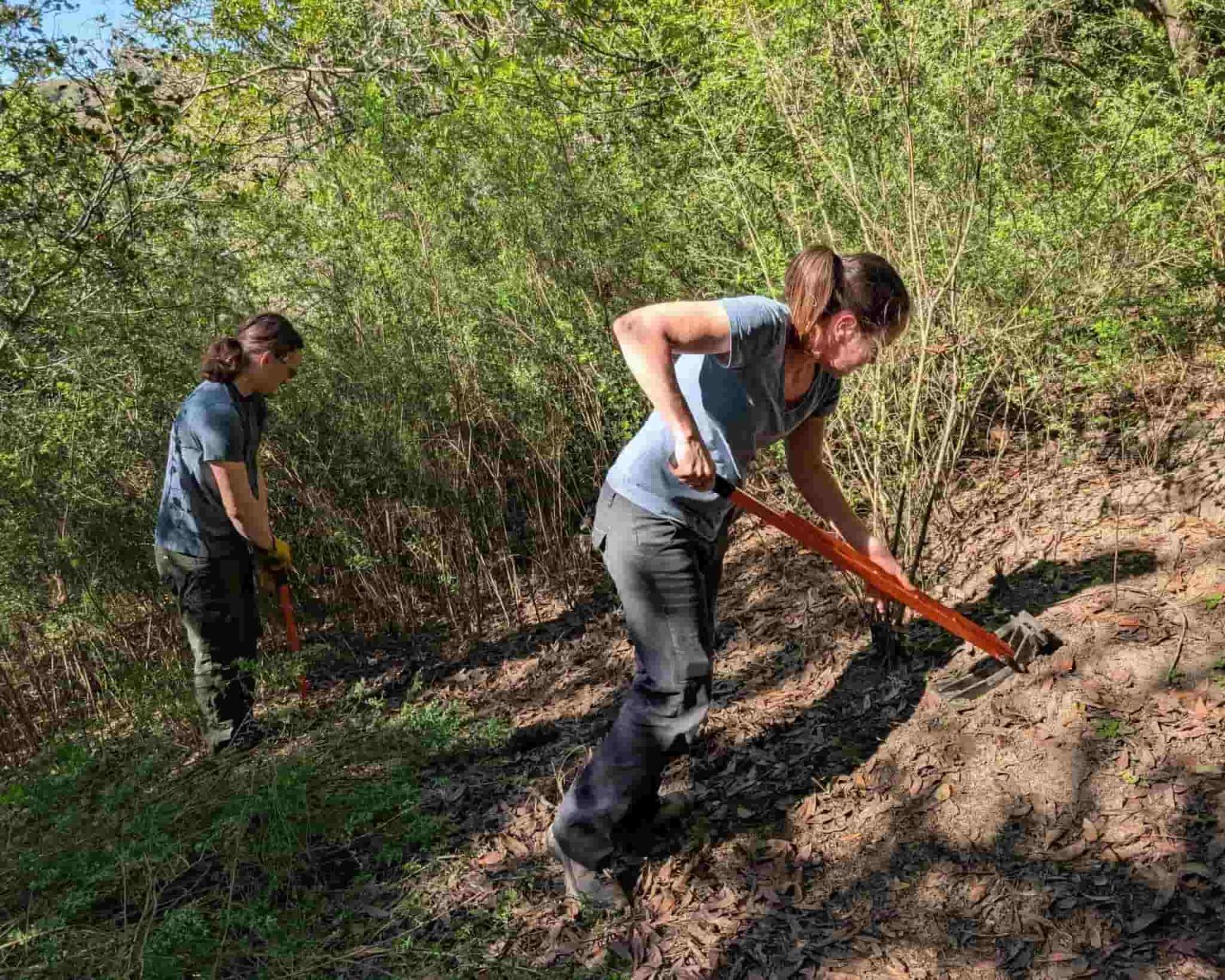
NECHAMA volunteers enjoyed using weed wrenches to tackle larger broom plants. Thanks to their efforts, we lowered the broom density even more in this area to help Claremont Canyon become more wildfire safe | Photo by Wyllie Clayson.
Broom removal at Signpost 29
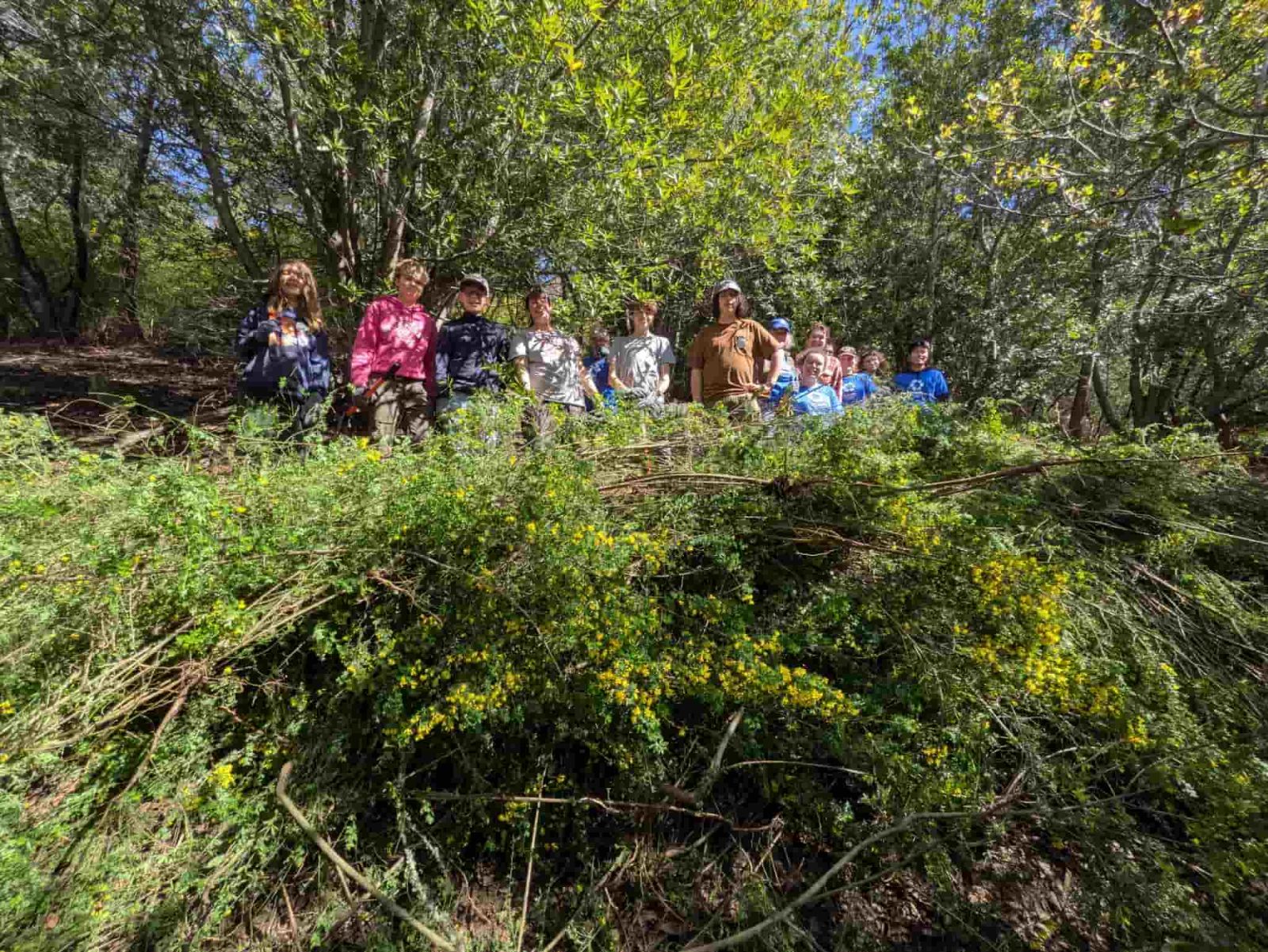
Our broom removal efforts continue in the upper canyon. Volunteers have been helping us pull non-native broom plants to help native plants grow and expand in the understory of our native oaks and bays. Broom is highly invasive and flammable, tends to overcrowd native plants, creates a monospecific stand (a forest of a single species), and excludes wildlife. Thanks to the hard work from our volunteers, we've removed over 5,000 plants so far this year. Join us at our next volunteer event. Grab a weed wrench, help us remove broom, and help us lower fire fuels! We provide tools and gloves.
Visit this 13-acre park and help restore its native wild habitat (we meet year-round). Meet at the Fireplacebelow the Evergreen Lane entrance (Map). For more informationor questionscontactWyllie.
Join us at Signpost 29 for a day of restoration (1.5 miles up Claremont from the intersection of Ashby/Tunnel Rd.) as we work to restore and maintain pathways, remove invasive broom and collect litter. More information Here. Questions? Contact us at info@ClaremontCanyon.org.
Help restore native plants and maintain a popular trail! Weed invasive plants, plant seeds, and-if it comes to it-water native seedlings. Located in the small side canyon just north of Claremont Canyon, which is above the Clark Kerr campus. No prior experience needed. Gloves and tools are provided.
Please contact Jim Rosenau or call at (510) 845-0106.
Hiking the Canyon
We would love to hear from our members and others who are out hiking or otherwise observing nature in the canyon. Send us your pictures at info@ClaremontCanyon.org and we will feature one each month.
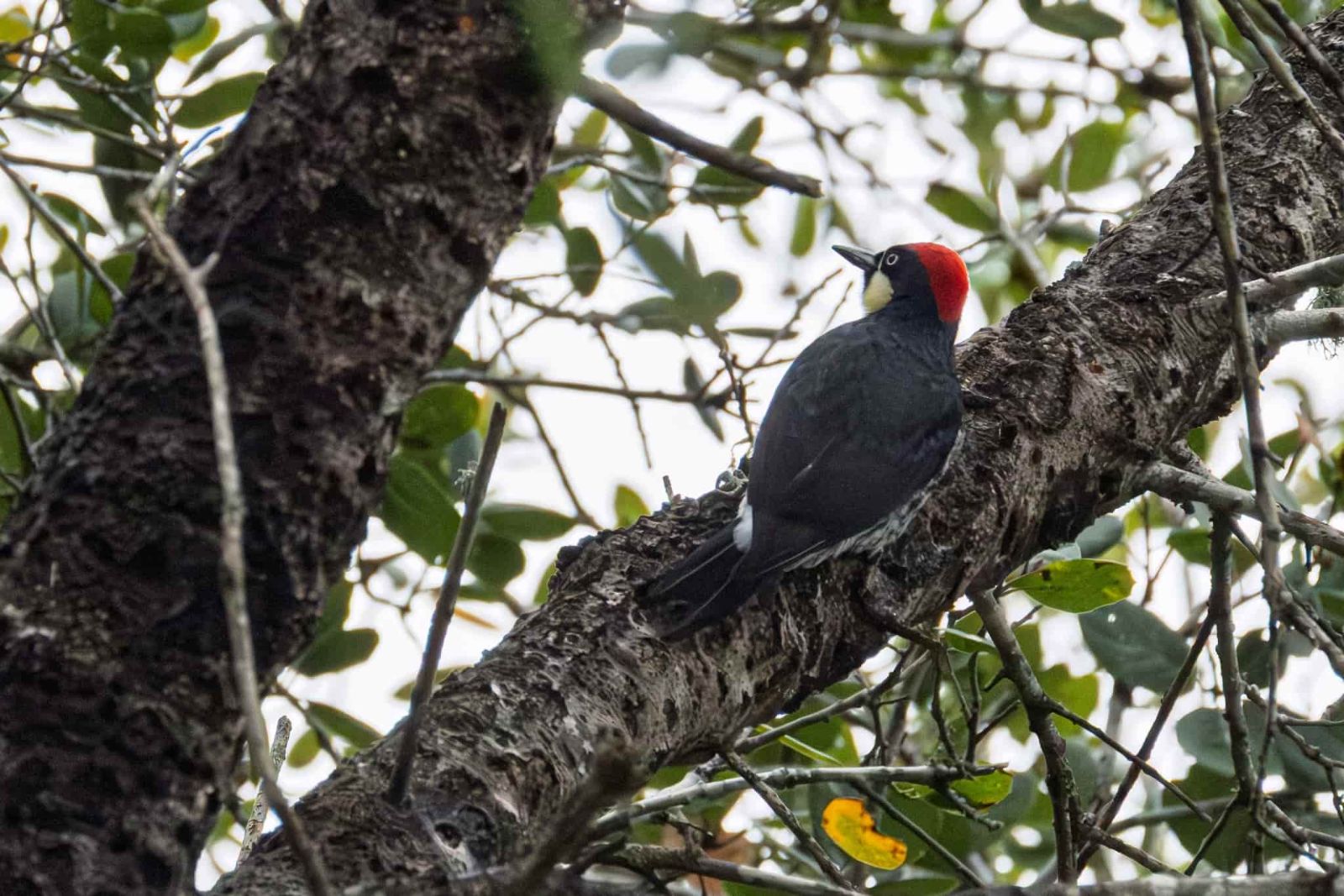
A curious Acorn Woodpecker (Melanerpes formicivorus) on an oak tree at the "Woodpecker Trail" | Photo by Greg Steinbrecher, February 2026.
Share this newsletter with your friends: Do you have a friend who would appreciate receiving our monthly email newsletter? You can easily add new recipients to our mailing list by going here.
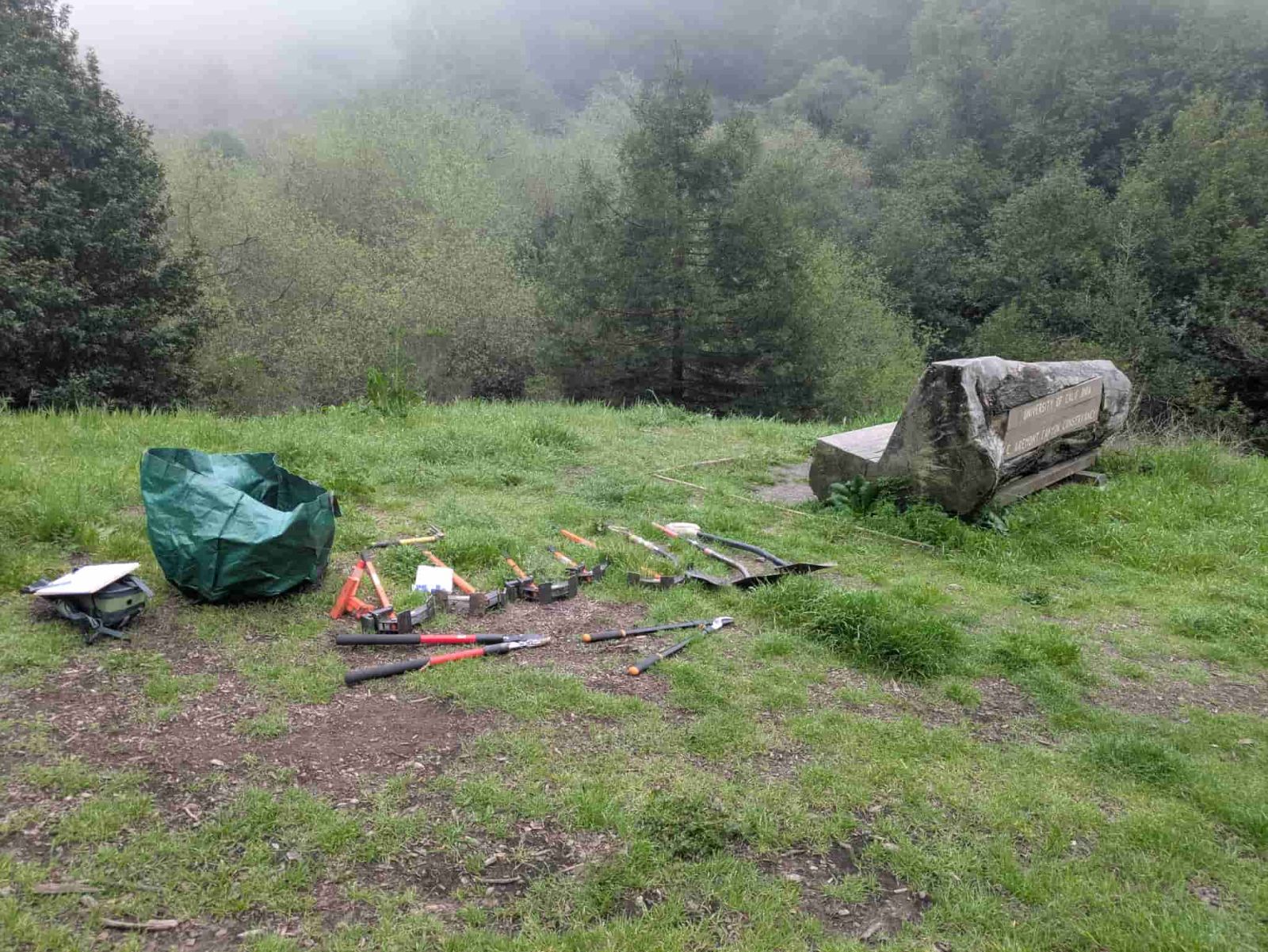
At Signpost 29 we have been working diligently to remove many invasive and non-native plants, including broom. On a misty morning, our volunteer coordinator Wyllie has setup the tools needed for a volunteer event with NECHAMA, especially our weed wrenches—our favorite tools for pulling this plant's taproot | Photo by Wyllie Clayson, March 2026.
Trails are open
All trails are open and accessible throughout Claremont Canyon. The trails are muddy from all the rain so wear appropriate shoes and be extra careful. For maps and complete information on trails click here. You can also take a guided tour here. Please stay safe and take all items and pet waste out with you.